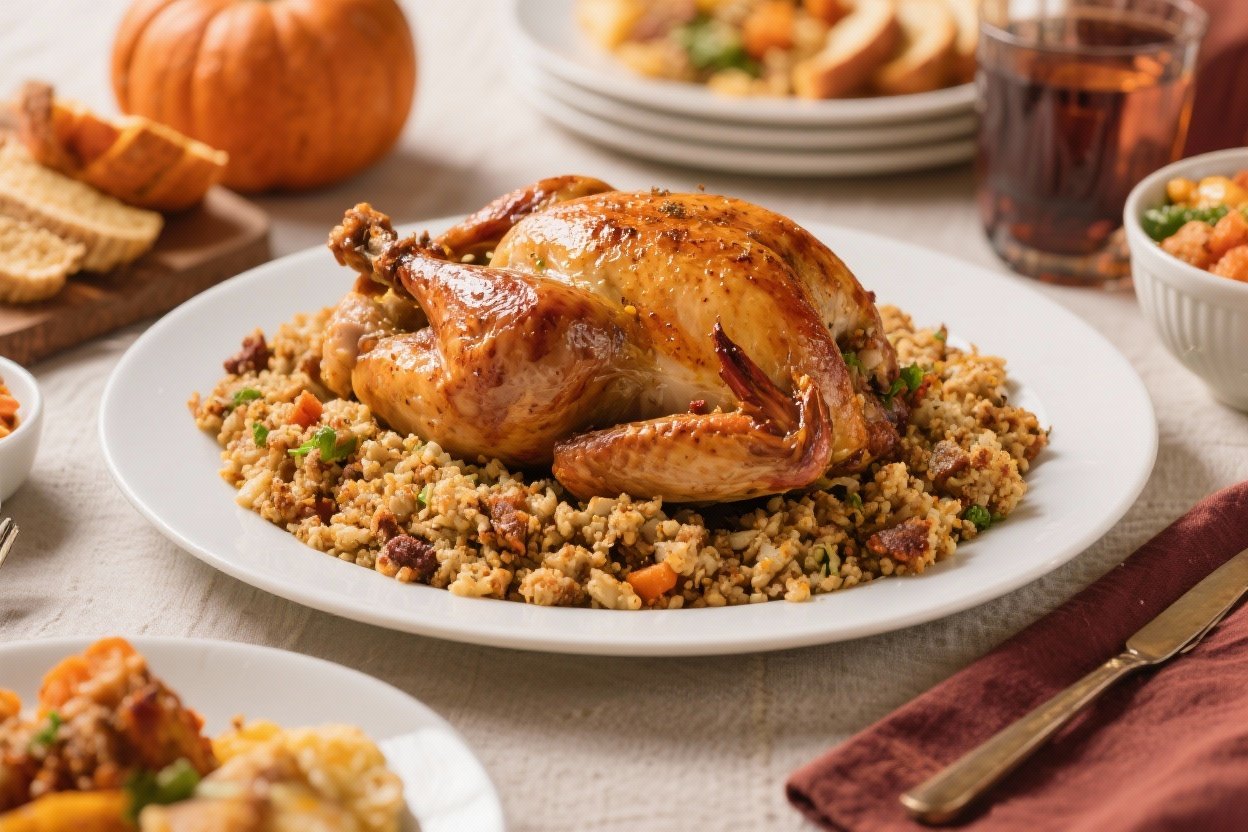
The Ultimate Classic Thanksgiving Dinner with Roast Turkey and Stuffing
Thanksgiving dinner is all about comfort, warmth, and food that brings people together. This classic roast turkey with stuffing delivers exactly that—flavorful, juicy meat, golden skin, and a savory stuffing that tastes like the holiday itself. The process is simple once you break it down, and most of it is hands-off.
With a few smart steps, you’ll be carving a gorgeous turkey and spooning stuffing that gets requested year after year.
Why This Recipe Works
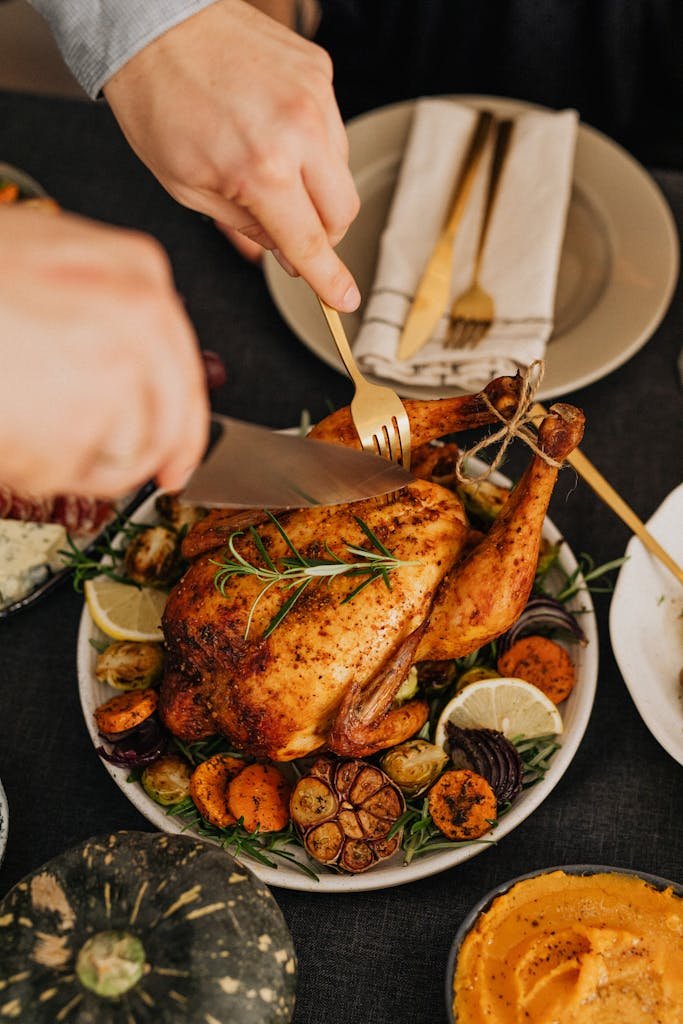
This approach focuses on moisture, flavor, and timing. A simple dry brine seasons the turkey deeply and helps the skin crisp beautifully. Aromatics in the cavity and butter under the skin add rich flavor without fussy techniques.
Roasting at a steady temperature keeps the meat tender, while resting ensures those juices stay in the bird. The stuffing bakes separately, which keeps it safe and gives it the crisp top everyone loves.
What You’ll Need
- Turkey: 12–14 lb whole turkey, thawed if frozen
- Salt and pepper: Kosher salt (about 1 tablespoon per 4 pounds of turkey), freshly ground black pepper
- Butter: 8 tablespoons (1 stick), softened
- Aromatics: 1 onion (quartered), 1 lemon (halved), 1 head of garlic (halved), a few sprigs of fresh thyme, rosemary, and sage
- Olive oil: 2 tablespoons
- Broth: 4–6 cups low-sodium chicken or turkey broth (for basting and stuffing)
- For the stuffing:
- 1 lb day-old bread, cut into 1-inch cubes (country bread or sourdough works well)
- 1 large onion, diced
- 3 celery stalks, diced
- 2 carrots, diced
- 4 tablespoons butter
- 2 cloves garlic, minced
- 2–3 tablespoons fresh herbs (sage, thyme, parsley), chopped
- 2–3 cups warm chicken or turkey broth
- 2 eggs, lightly beaten
- Salt and pepper to taste
- For gravy (optional but recommended):
- Turkey pan drippings
- 2 tablespoons flour
- 1–2 cups broth
- Salt and pepper
Step-by-Step Instructions
- Dry brine the turkey (24 hours ahead): Pat the turkey dry with paper towels. Sprinkle kosher salt evenly over the entire bird, including under the skin on the breasts if possible.
Add pepper. Place on a rack set inside a baking sheet and refrigerate uncovered for up to 24 hours. This seasons the meat and dries the skin for crisping.
- Prep the oven and bird: Remove the turkey from the fridge an hour before roasting.
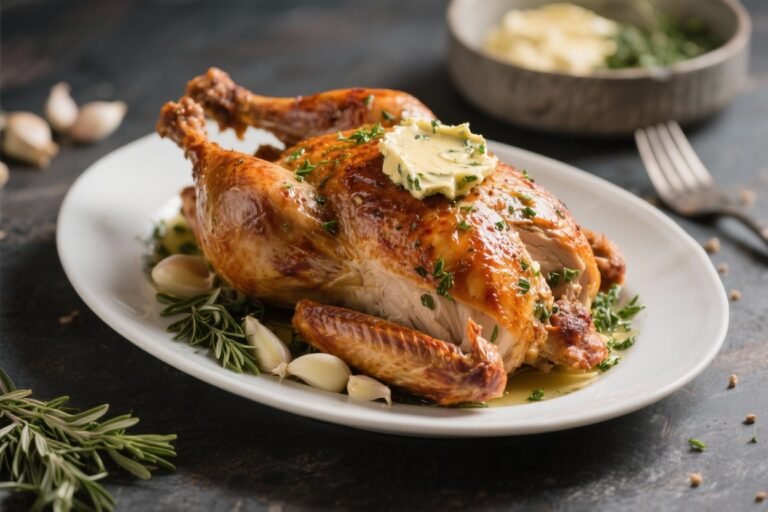
Preheat the oven to 325°F (165°C). Mix softened butter with a pinch of salt, pepper, and chopped herbs. Gently loosen the breast skin and rub some butter underneath, then spread the rest over the skin.Place onion, lemon, garlic, and a few herb sprigs in the cavity. Tie legs with kitchen twine and tuck the wing tips under.
- Set up the roasting pan: Place the turkey on a rack in a large roasting pan. Add 2 cups of broth to the pan to keep drippings from burning.
Brush the skin with olive oil for extra browning.
- Roast the turkey: Roast at 325°F. As a guide, plan about 13–15 minutes per pound. Baste a couple of times with pan juices after the first hour, but avoid opening the oven too often.
If the skin gets too dark, tent loosely with foil.
- Begin the stuffing: While the turkey roasts, spread the bread cubes on a baking sheet and toast in the oven for 10–15 minutes until dry and lightly golden. Set aside.
- Cook the vegetables: In a large skillet, melt 4 tablespoons butter over medium heat. Add onion, celery, and carrots with a pinch of salt.
Cook until softened, 8–10 minutes. Stir in garlic and herbs, cook 1 minute more.
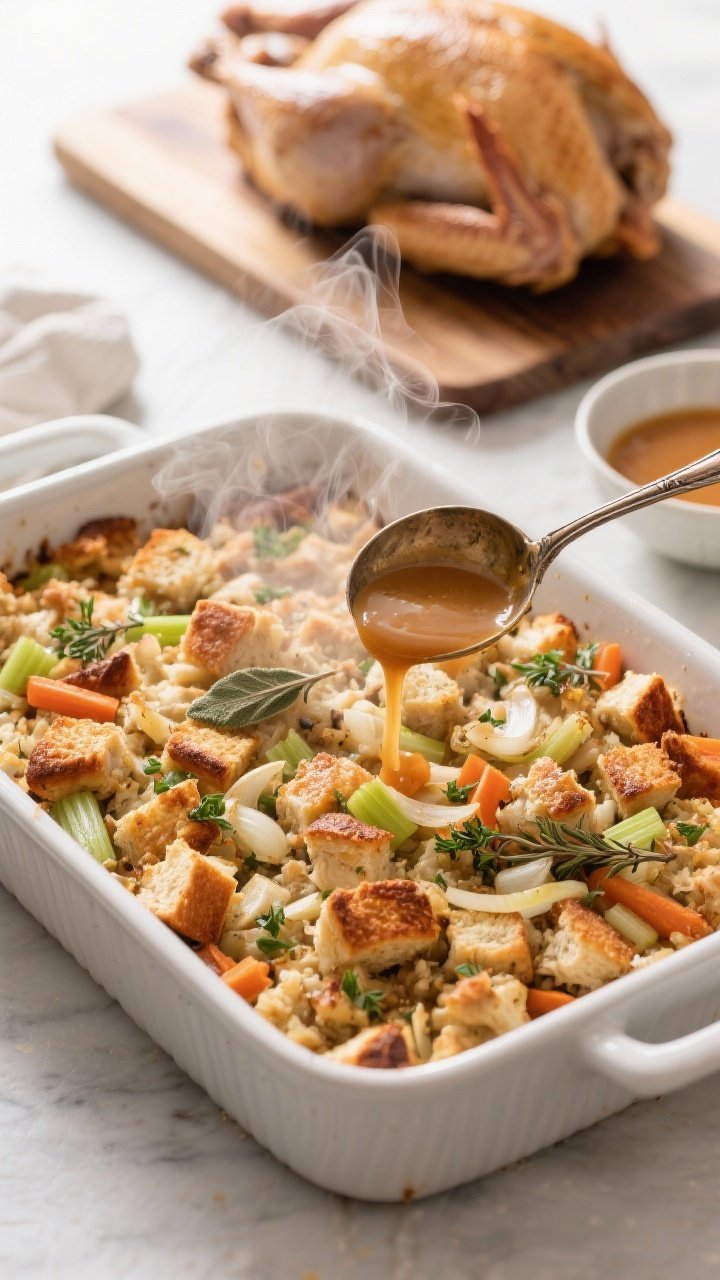
- Assemble the stuffing: In a big bowl, combine toasted bread, sautéed vegetables, and enough warm broth to moisten well but not turn soggy. Stir in eggs.
Season with salt and pepper. Transfer to a buttered 9×13-inch baking dish. Cover with foil and set aside.
- Check turkey doneness: Start checking 45–60 minutes before the estimated finish time.
The turkey is done when a thermometer reads 165°F in the thickest part of the thigh and the breast reaches about 160°F (it will rise as it rests).
- Rest the turkey: Transfer the turkey to a carving board and tent loosely with foil. Let it rest at least 30 minutes. This is crucial for juicy meat.
- Bake the stuffing: While the turkey rests, bake the stuffing at 350°F for 25–30 minutes covered, then uncover and bake 10–15 minutes more until the top is crisp and golden.
- Make the gravy: Pour pan drippings into a measuring cup and skim fat.
Place the roasting pan on the stove over medium heat. Add 2 tablespoons fat (or butter) and 2 tablespoons flour, whisking to form a roux. Cook 1–2 minutes.Whisk in drippings and enough broth to reach your desired consistency. Simmer until glossy. Season to taste.
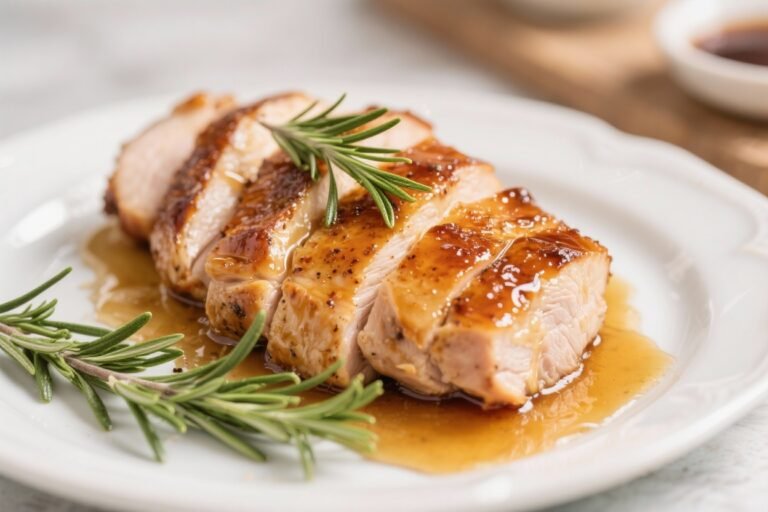
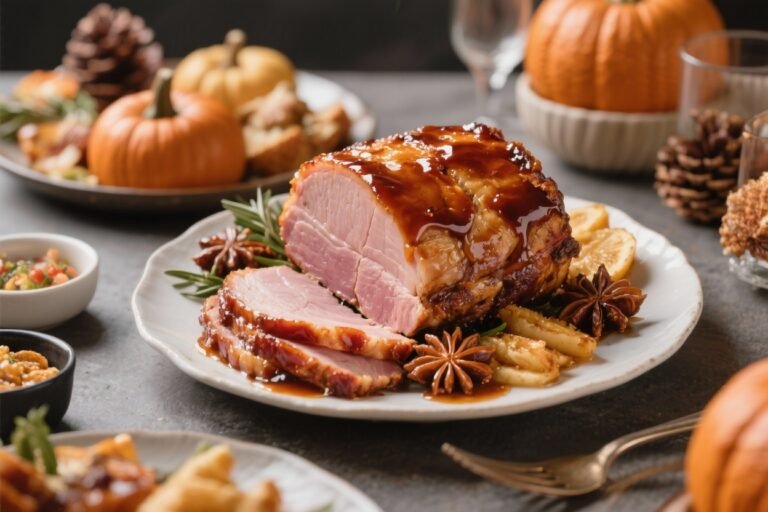
- Carve and serve: Slice the turkey, arrange on a warm platter, and serve with stuffing and gravy.
Garnish with fresh herbs for a festive look.
How to Store
- Leftover turkey: Cool, then store sliced meat in airtight containers for up to 4 days in the fridge. Freeze for up to 3 months.
- Stuffing: Refrigerate up to 4 days. Reheat covered with a splash of broth to keep it moist, then uncover to crisp.
- Gravy: Store in a jar for up to 3 days.
Reheat gently, whisking in a little broth if too thick.
Health Benefits
Turkey is a lean protein source, especially the breast meat, which supports muscle repair and keeps you fuller longer. Herbs like thyme, sage, and rosemary add antioxidants and flavor without extra calories. Making gravy from pan drippings and broth lets you control salt and fat.
If you use whole-grain bread for the stuffing and add extra vegetables, you’ll boost fiber and micronutrients while keeping the holiday spirit intact.
Common Mistakes to Avoid
- Skipping the rest: Cutting into the turkey right away releases juices. Resting keeps the meat moist.
- Over-salting late: Dry brine ahead and season thoughtfully. Adding too much salt at the end can throw off the balance.
- Stuffing the bird: It slows cooking and can be unsafe if the stuffing doesn’t reach 165°F.
Bake stuffing separately for better texture and safety.
- Forgetting a thermometer: Guessing leads to dry or undercooked turkey. A probe or instant-read thermometer is essential.
- Neglecting the skin: Pat dry, butter under the skin, and oil the outside for crisp, golden results.
Variations You Can Try
- Herb and citrus turkey: Add orange zest and more lemon to the cavity and butter for brighter flavor.
- Garlic-butter turkey: Mash roasted garlic into the butter for deeper, savory notes.
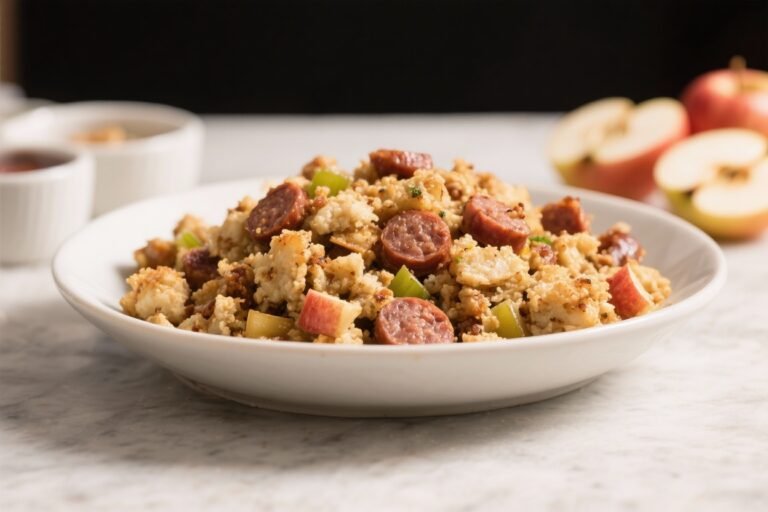
- Sausage stuffing: Brown 1 lb Italian or breakfast sausage and fold into the stuffing for extra richness.
- Mushroom and sage stuffing: Sauté cremini or wild mushrooms with thyme and fold in for a woodsy profile.
- Gluten-free option: Use gluten-free bread and a cornstarch slurry for the gravy instead of flour.
- Make-ahead shortcut: Toast bread and sauté vegetables a day in advance. Assemble stuffing just before baking.
FAQ
How long does it take to thaw a frozen turkey?
Plan on about 24 hours of fridge thawing for every 4–5 pounds.
A 12–14 lb turkey will need 3–4 days in the refrigerator. Place it on a tray to catch drips.
Can I roast at a higher temperature to save time?
You can start at 425°F for 20–30 minutes to jumpstart browning, then reduce to 325°F to finish. Keep an eye on the skin and tent with foil if needed.
Do I need to baste?
Basting helps with color and adds flavor, but it’s optional.
If you baste, do it a couple of times after the first hour to avoid losing too much heat.
What if my turkey is done early?
Tent with foil and keep it warm by holding in a 200°F oven, or let it rest and rewarm slices briefly in hot broth just before serving.
Can I use boxed stuffing mix?
Yes. You can boost flavor by sautéing fresh onion, celery, and herbs, then mixing them into the prepared stuffing. Bake it in a dish for a crisp top.
How do I keep the breast from drying out?
Butter under the skin, steady heat, and not overcooking are key.
Tent the breast with foil if it browns too fast, and always rest the turkey before carving.
Is it safe to stuff the turkey?
It’s safer and more reliable to bake stuffing separately. If you do stuff the bird, ensure the center of the stuffing reaches 165°F before serving.
What’s the best bread for stuffing?
Day-old country loaf or sourdough holds up well. Brioche adds richness, and whole-grain bread brings a hearty texture and more fiber.
In Conclusion
A classic Thanksgiving dinner doesn’t have to be stressful.
With a well-seasoned turkey, aromatic butter, and a simple, satisfying stuffing, you’ll have a centerpiece worthy of the occasion. Follow the timings, trust your thermometer, and give the turkey a proper rest. The result is a golden bird, savory stuffing, and a table full of happy eaters—just what the holiday is all about.

Hi, I’m Hannah — the food lover behind Every Day Quick Meals! I’m all about making cooking simple, joyful, and stress-free. Between work, life, and a million to-dos, I know how hard it can be to find time for homemade food. That’s why I create quick, tasty recipes that anyone can make — no fancy skills required. My kitchen motto? Good food doesn’t need to be complicated — just made with love.