Cozy Autumn Butternut Squash Soup – Creamy, Comforting, and Easy
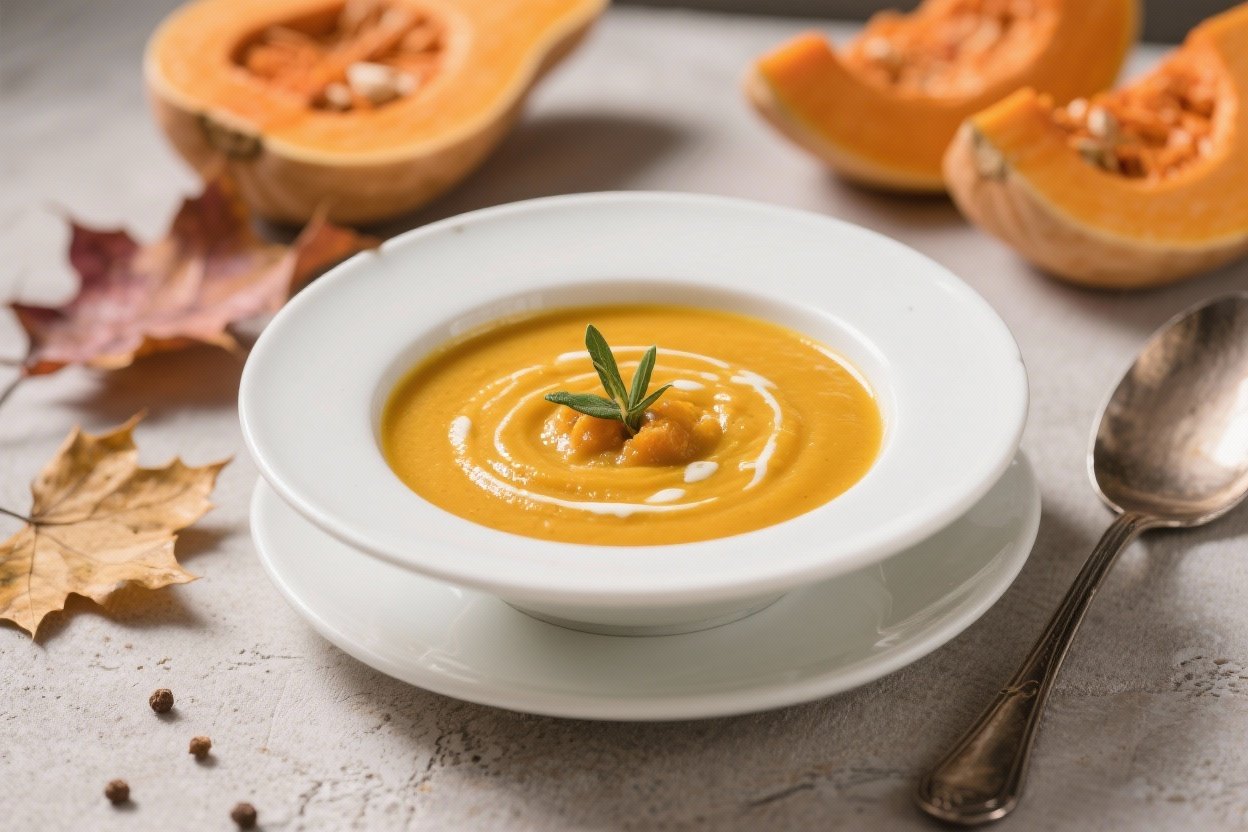
There’s something about a bowl of butternut squash soup that makes a cool day feel softer and calmer. It’s warm, silky, and lightly sweet — the kind of comfort food that doesn’t weigh you down. This version is simple to make, deeply flavorful, and perfect for weeknights or a relaxed weekend meal.
You’ll roast the squash for extra caramelized flavor, then blend it into a creamy soup with just the right amount of spice. Pair it with crusty bread, a grilled cheese, or keep it simple with a sprinkle of pumpkin seeds on top.
What Makes This Recipe So Good
- Roasted squash equals richer flavor: Roasting brings out the squash’s natural sweetness and adds a light caramel note you can’t get from simmering alone.
- Velvety without heavy cream: A splash of coconut milk or half-and-half makes it silky while keeping it light.
- Balanced seasoning: A hint of cinnamon and smoked paprika adds warmth without turning it into dessert.
- Meal-prep friendly: It reheats beautifully and freezes well, so you can cook once and enjoy it all week.
- Flexible: Make it vegan, add protein, or adjust the spices to your taste — it’s wonderfully forgiving.
Shopping List
- 1 large butternut squash (about 3–4 pounds)
- 2 tablespoons olive oil, plus more for roasting
- 1 large yellow onion, chopped
- 2 carrots, peeled and sliced
- 2 celery stalks, sliced (optional but adds depth)
- 3 cloves garlic, minced
- 1 tablespoon fresh ginger, grated (or 1 teaspoon ground)
- 1 teaspoon ground cinnamon
- 1/2 teaspoon smoked paprika (or regular paprika)
- 1/4 teaspoon ground nutmeg (optional)
- 4 cups vegetable or chicken broth
- 1/2 cup full-fat coconut milk or half-and-half
- 1–2 tablespoons maple syrup (optional, to taste)
- Salt and black pepper
- Juice of 1/2 lemon (or 1 teaspoon apple cider vinegar)
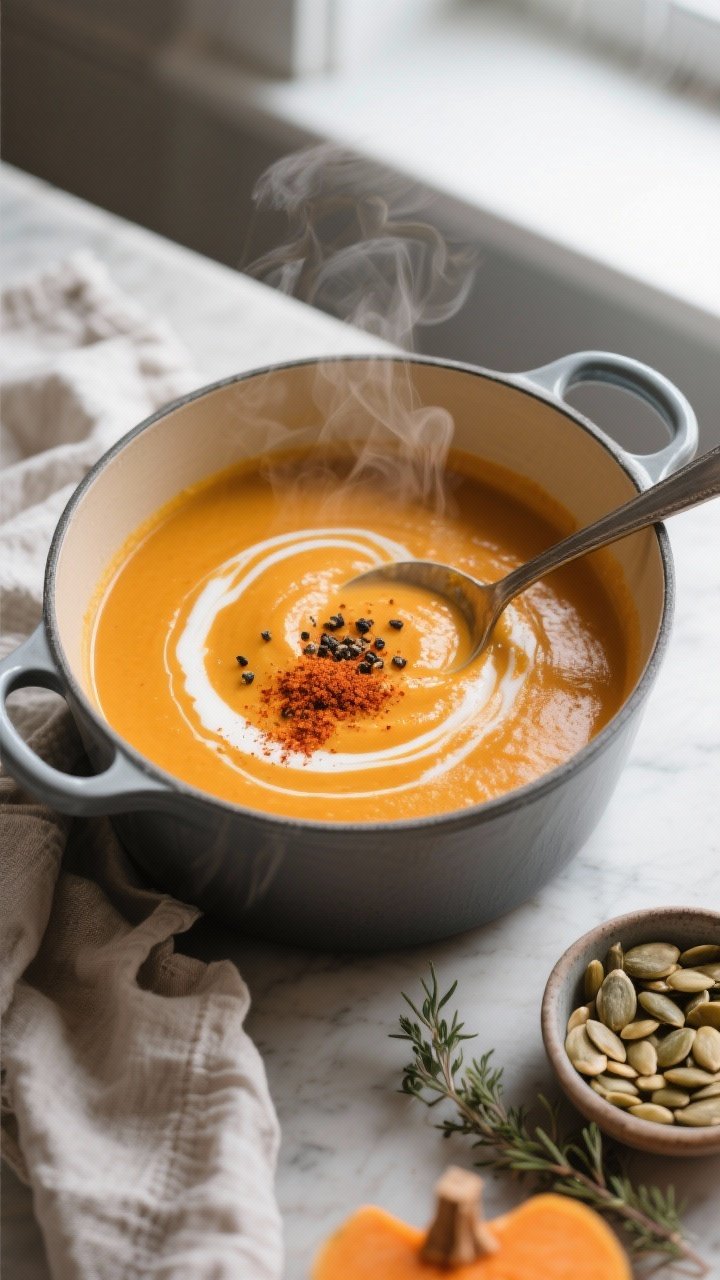
- Optional garnishes: pumpkin seeds, fresh thyme, a drizzle of cream or olive oil, red pepper flakes
Step-by-Step Instructions

- Preheat and prep: Heat the oven to 400°F (200°C). Halve the butternut squash lengthwise and scoop out the seeds.Rub the cut sides with olive oil and season with salt and pepper.
- Roast the squash: Place the squash cut side down on a parchment-lined baking sheet. Roast for 40–50 minutes, until the flesh is very tender and caramelized at the edges.
- Sauté the aromatics: While the squash roasts, warm 2 tablespoons olive oil in a large pot over medium heat. Add onion, carrots, and celery.Cook 7–9 minutes until soft and lightly golden. Stir in garlic and ginger for 1 minute.
- Add spices: Sprinkle in cinnamon, smoked paprika, and nutmeg. Cook 30 seconds to bloom the spices, stirring constantly so nothing burns.
- Scoop and combine: When the squash is cool enough to handle, scoop the flesh into the pot.Discard the skins. Stir to coat the squash in the aromatics and spices.
- Add broth and simmer: Pour in the broth. Bring to a gentle boil, then reduce heat and simmer for 10 minutes to marry the flavors.
- Blend until smooth: Use an immersion blender to puree in the pot until silky.Or carefully blend in batches in a countertop blender. Return the soup to the pot if needed.
- Finish with creaminess: Stir in coconut milk or half-and-half. Add maple syrup if you like a touch of sweetness.Season with salt and pepper to taste.
- Brighten: Add lemon juice or apple cider vinegar to wake up the flavors. Taste and adjust seasoning.
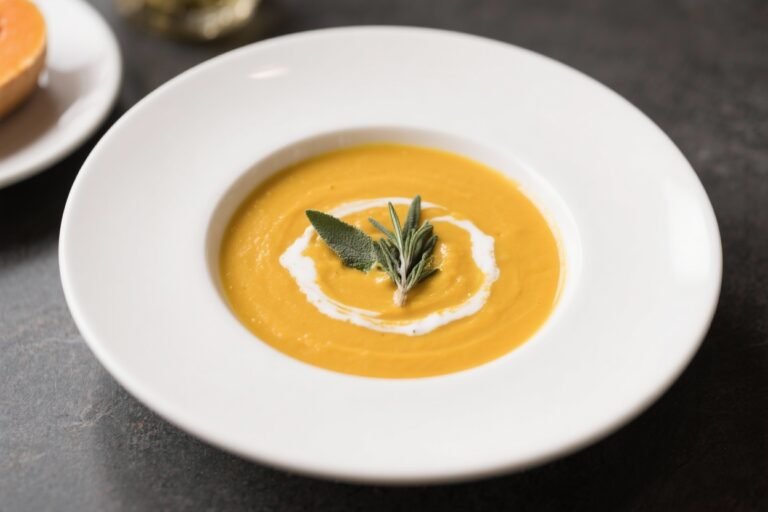
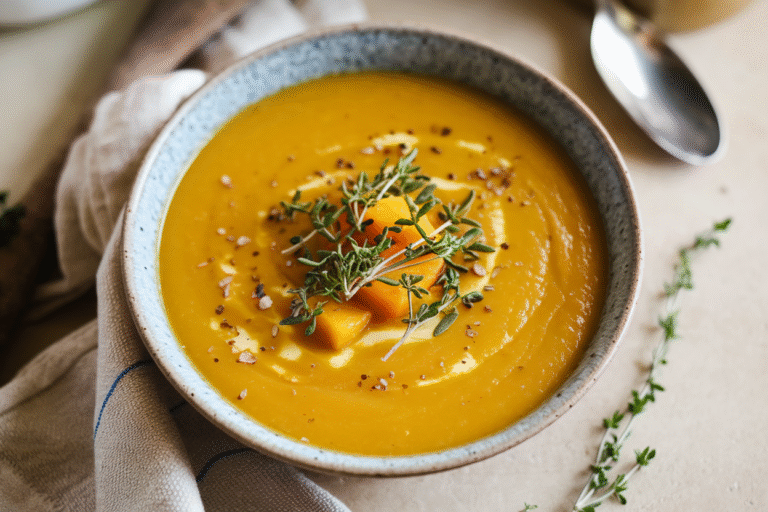
- Serve: Ladle into bowls and garnish with pumpkin seeds, fresh thyme, a drizzle of cream, or a pinch of red pepper flakes for heat.
Storage Instructions
- Refrigerator: Store in an airtight container for up to 4–5 days. The flavors deepen by day two.
- Freezer: Freeze in portioned containers for up to 3 months.Leave a little headspace for expansion.
- Reheating: Warm gently on the stovetop over low heat, stirring occasionally. If it thickens, add a splash of broth or water.
- Make-ahead tip: Roast the squash a day ahead and refrigerate the flesh. The soup comes together fast when the squash is ready to go.
Health Benefits
- Rich in vitamins: Butternut squash is packed with vitamin A (beta-carotene) for eye health and immune support, plus vitamin C for antioxidant benefits.
- Fiber-friendly: The squash and vegetables provide fiber for digestion and steady energy.
- Light but satisfying: With broth and a modest amount of coconut milk or dairy, you get creaminess without heaviness.
- Anti-inflammatory spices: Ginger and cinnamon add warmth and may support digestion and metabolic health.
- Lower sodium control: Making it at home lets you manage the salt and choose a low-sodium broth if needed.
Pitfalls to Watch Out For
- Under-roasting the squash: If it’s not fully tender and caramelized, the soup can taste flat.Roast until easily pierced with a fork.
- Skipping the acid: A squeeze of lemon or a splash of vinegar at the end brightens the sweetness and balances the flavors.
- Over-spicing: Cinnamon and nutmeg should be subtle. Too much can make the soup taste like dessert. Start small and adjust.
- Blender safety: If using a countertop blender, vent the lid and blend in batches to avoid steam buildup.
- Too thick or too thin: Adjust with more broth for a looser texture, or simmer to reduce if it’s watery.
Variations You Can Try
- Apple twist: Add 1 peeled, chopped apple to the pot with the carrots for a gentle fruity note.
- Curry version: Swap the cinnamon and paprika for 1–2 teaspoons curry powder and a pinch of turmeric.Finish with coconut milk and lime.
- Spiced maple: Stir in 1 tablespoon maple syrup and a pinch of cayenne for a sweet-heat combo.
- Protein boost: Add cooked shredded chicken or top with crispy chickpeas for extra protein and texture.
- Herb-forward: Blend in a handful of fresh parsley or sage at the end for an herbal lift.
- Roasted garlic: Roast a whole head of garlic alongside the squash and squeeze the cloves into the pot for deep, mellow flavor.
FAQ
Can I use pre-cut squash?
Yes. Toss the cubes with olive oil, salt, and pepper, then roast at 400°F until tender and caramelized. It saves time and works just as well.
Do I have to peel the squash?
Not if you roast it halved.
After roasting, the flesh scoops right out and the skin is discarded, so there’s no peeling required.
What can I use instead of coconut milk?
Half-and-half, heavy cream, or even plain Greek yogurt (stirred in off the heat) all work. For a dairy-free option without coconut, try oat cream or cashew cream.
How can I make it spicier?
Add red pepper flakes, a pinch of cayenne, or a swirl of chili crisp when serving. Start small and build heat to taste.
Can I make this in a slow cooker?
Yes.
Sauté the aromatics first for best flavor, then add everything (except the coconut milk and lemon) to the slow cooker and cook on low 6–8 hours. Blend, finish with coconut milk and lemon, and season.
What if my soup is too sweet?
Balance it with salt, black pepper, and acidity. A squeeze of lemon juice or a splash of apple cider vinegar helps cut sweetness immediately.
Can I use frozen butternut squash?
You can.
Roast from frozen until caramelized or sauté straight from frozen and simmer longer. Roasting improves flavor, so it’s worth the extra step.
Wrapping Up
This Cozy Autumn Butternut Squash Soup is comfort in a bowl: warm, smooth, and layered with gentle spice. It’s easy to make, adaptable to your pantry, and friendly to weeknights or guests.
Roast the squash, blend it silky, and finish with a bright squeeze of citrus — that’s the secret to a balanced, memorable soup. Keep a batch in the fridge, freeze a few portions, and you’ve got cozy meals ready whenever the weather turns crisp.

Hi, I’m Hannah — the food lover behind Every Day Quick Meals! I’m all about making cooking simple, joyful, and stress-free. Between work, life, and a million to-dos, I know how hard it can be to find time for homemade food. That’s why I create quick, tasty recipes that anyone can make — no fancy skills required. My kitchen motto? Good food doesn’t need to be complicated — just made with love.